The Capital · Kaafu Atoll · the capital and its reclaimed twin

Malé

The country's only city, held on a single mile-wide island — and its reclaimed twin, Hulhumalé.

Operated by avé, end to end

Malé, at a glance.

Drawn as an opening, not a stay — the working capital at dawn, the old coral-stone quarter, and the bridge to the city still being built.

  • The rooms
  • The table
  • The movement
  • Transfers
  • One ledger

Pricing follows in the reply · within 24 hours, no obligation

Nights
1 · 2 · 3
avé pick
The Market Dawn1 day
The peak
The fish market at dawnCulture
Atoll
Kaafu — the capital
Composed of
Malé · Hulhumalé · Vilingili
Population
Approx. 250,000 — Greater Malé
Area
~2.2 sq mi (Malé proper)
The bridge
Sinamale Bridge · opened MMXVIII
The island, in full

Malé is among the most densely populated capitals in the world — roughly a quarter-million people on a single island just over two square miles. The whole country touches it at some point: the morning ferries, the fish lined up at the market, the council halls, the schools, the cardiology referrals. Hulhumalé is the city's reclaimed extension, drawn from the lagoon east of Malé in two phases since 1997 and connected since 2018 by the Sinamale Bridge. It carries the breathing room that Malé proper does not — a designated swimming beach, a wider grid, a different urban pace. avé holds the two as one short urban opening: the working face of the country at full pitch, before the resort week settles the day back into lagoon time.

For the traveller who wants the urban Maldives — the tea-rooms and the fish market, the old coral-stone mosque, and the long bridge across to the new island that the country is still building.

  • Capital city
  • Fish market
  • Hulhumalé bridge

The Opening · the journeys we compose

The capital, before the lagoon.

Malé is the country at full pitch — a quarter-million people on a mile-wide island, the fish market at dawn, the oldest coral-stone mosque in the Indian Ocean, and the long bridge across to Hulhumalé's wider grid.

  1. avé pick

    1day

    The Market Dawn

    the working city

    The fish market as the yellowfin land, tea on the harbour wall with the auction in Dhivehi behind you, then the old quarter before the heat — the capital's working face, read with a local host.

  2. 2days

    The Two Cities

    Malé & Hulhumalé

    The mile-wide capital and its reclaimed twin in one held arc — the market and the coral-stone mosque on the first day, the bridge crossing, the new city's beach and a rooftop supper on the second.

  3. 3days

    The Full Capital

    the deep read

    The unhurried version — the markets, the old quarter, the Vilingili ferry to the car-quiet suburb, the submarine's forty-metre hour for the unhurried curious, and the rooftops at dusk.

Held at 1 · 2 · 3 nights · pricing follows in the reply

The excursions

What the island holds.

The named days of Malé, each held privately. Open one to read it — add it in the composer below.

  • Culture · SignatureThe fish market at dawn2 hours · first light

    Yellowfin lined on ice, the auction in Dhivehi, the produce market's coconut and dried-fish stalls next door — the whole country's working morning in two waterfront halls, read with a host who knows the men on the steps.

  • CultureThe old quarter walkHalf day · before the heat

    Hukuru Miskiy's carved coral-stone walls — 1658, and on UNESCO's tentative list — then the National Museum's royal lacquerwork, Mulee'aage's facade and Sultan Park's shade. Visits composed around the prayer hours, permissions held ahead.

  • LandThe bridge & the new cityHalf day

    Across the Sinamalé Bridge to Hulhumalé — the reclaimed grid the country is still drawing, the long eastern beach with its designated swim end, and the view back at the capital stacked on its own reflection.

  • TableA rooftop supperEvening

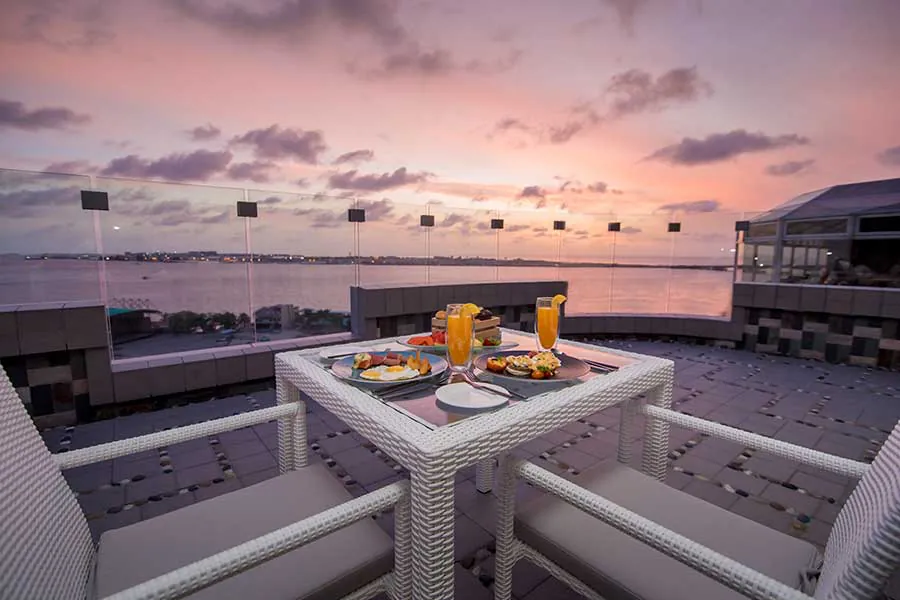
    The capital's best hour — a held table above the harbour as the bridge lights come up, yellowfin done properly, and the city's noise arriving as a murmur.

  • TableThe hedhikaa hour1 hour · late afternoon

    Mas-roshi, bajiya, gulha and the long sweet tea at one of the city's old tea-rooms — the small civic ceremony every Maldivian day observes.

  • LandThe Vilingili ferryHalf day

    Ten minutes by public ferry to the capital's car-quiet suburb — public beaches, a slower grid, and the city read from across its own channel.

  • WaterThe submarine hour~2 hours

    The viewing submarine's slow descent to forty metres on Tear Drop Reef — the reef without the wetsuit, held for the curious, the small, and the firmly dry.

The standard

Operated, not just booked.

A guesthouse on Malé is a different kind of luxury, not a budget compromise. This is how we hold it.

  • Vetted houses & operators

    Every guesthouse, guide and boat is one we have used or inspected. We operate nothing we would not put our own guests on.

  • A guide who is yours

    Not a group tour — your own host on the island, who knows the families, the captains and the reef, and holds the day to your pace.

  • Rooms held to a standard

    En-suite, air-conditioned, the board you chose — the room secured in your name before you fly, never left to chance on arrival.

  • Transport, handled

    Speedboat, ferry or domestic flight, aligned to your arrival window. The connections are ours to arrange, not yours to chase on the dock.

  • Safety, not left to luck

    A local contact through the journey, an emergency line, and the standards we hold every operator to — on the water and off it.

  • One ledger, one payment

    A single, clear price and one payment for the whole journey — not a dozen guesthouse bookings settled in cash on arrival.

How we hold every journey

The shape of a day

How the day holds.

  1. 6.30

    The fish market at dawn

    Yellowfin lined up on ice; the auction in Dhivehi; the steps of the harbour-wall held by men in long trousers and sweet milk tea.

  2. 9.00

    The old quarter

    A slow walk through the coral-stone lanes — Hukuru Miskiy (the old Friday Mosque), Republic Square, the Tsunami Monument. Held quietly, before the heat.

  3. 12.30

    A hedhikaa tea-room

    Mas-roshi, fish bajiya, gulha, the long sweet tea — the small civic ceremony of the Malé afternoon.

  4. 15.00

    The bridge crossing

    A taxi across the Sinamale Bridge to Hulhumalé — the long view of the harbour, the airport island in the distance.

  5. 17.30

    The Hulhumalé beach

    The designated swimming end at phase 2 — the wider grid, the calm lagoon, a hour's walk along the new shore.

  6. 20.00

    A rooftop supper

    Back in Malé — a rooftop facing the harbour lights, a long supper of yellowfin and rice, the bridge a thin gold line across the channel.

Plan the trip

When to come, and how.

  • The dry city · Dec — Apr

    The iruvai keeps the capital's walking hours kind and the harbour glassy — the market dawns at their clearest, the rooftops at their best.

  • The wet season · May — Nov

    Short, theatrical squalls between sunshine — the city simply opens its arcades and waits them out. The tea-rooms do their best business.

  • The civic pause · Fridays

    The capital's week hinges on Friday prayers — the mosque quarter closes to visitors around midday and the city exhales. We draw the walking days around it.

Getting there

  • From Velana InternationalSpeedboat · 5 minutes to Malé · 10-min taxi to Hulhumalé
  • Public ferryContinuous service between airport, Hulhumalé and Malé
  • The bridgeSinamale Bridge — taxi in 8 minutes, or a 30-minute walk

The table

  • Working harbourThe fish market tea hourSteps of the market wall at dawn — tea, mas-roshi, the auction in Dhivehi. avé holds a quiet introduction to the men who hold the steps.
  • CivicA hedhikaa tea-roomA long sit at one of Malé's oldest tea-rooms — short eats, sweet milk tea, the slow afternoon hour.
  • PrivateA rooftop supperComposed by avé on a rooftop overlooking the harbour and the bridge — the urban hour at its kindest.

Malé · Questions

Asked, quietly answered.

Field notes

  1. Malé is among the most densely populated capitals in the world by area — the entire country lives, at some point, against the rhythm of this single mile-wide island.

  2. The Sinamale Bridge opened in 2018 and quietly reshaped how the country moves between its capital, its airport island (Hulhulé) and its planned urban extension (Hulhumalé).

  3. Hukuru Miskiy — the old Friday Mosque — is one of the oldest coral-stone mosques in the Indian Ocean. Its boundary stones carry traces of the Buddhist site that preceded Islam in the country.

  4. The designated swimming beach on Hulhumalé's phase 2 is the only resort-style beach within the greater capital — a quiet escape on the last afternoon before flying out.

Malé is not a place you ferry out to — it is the capital, sitting just across the water from the airport island. A public ferry makes the short crossing in about ten minutes for a dollar or two, running through the day and into the night, though sparser on Fridays. Since the bridge opened you can also simply drive over by taxi in well under ten minutes. We arrange whichever suits the hour you land.

Not in the way a resort island offers. Malé is the country's most conservative ground, and the courtesy here is covered shoulders and knees throughout. There are a couple of local swimming spots, but they are modest-dress places for residents rather than bikini beaches — keep swimwear for the resorts and the guesthouse islands further out.

No — Malé is dry, as every inhabited island is, so there are no bars and nothing served in the city itself. The one exception sits on the airport island next door: a hotel there is licensed for alcohol and draws layover guests for exactly that reason. We can point you to it for a quiet drink between flights.

The drier, cooler months from about November to April are the most comfortable for walking the city, with the early year usually the clearest. The southwest-monsoon months bring short showers and lower prices. Weather matters less here than on a beach island, since Malé is a walking-and-markets stop, but the cooler season makes the dense streets easier going.

It is a half-day of real Maldivian life rather than sand. We draw the days around the coral-stone Old Friday Mosque, finished in the seventeenth century and the country's most ornate; the working fish and produce markets along the northern waterfront; and the National Museum in the old palace grounds. A guided walk through it all runs from around US$40 a person, though prices shift year to year.

One, at most. Malé is tiny and tightly packed — you can cross the whole island on foot in well under an hour — so a single night works as a bookend to the trip, before an early flight or an onward boat. A half-day covers everything worth seeing; there is little reason to linger longer unless you are waiting on a connection.

It is the opposite of the Maldives most people picture — a vertical, scooter-filled island said to be among the most crowded on earth, and that contrast is the draw. Here is the nation's nerve centre and a huge share of its people on one small island, with genuine street life and heritage in a single compact walk. We treat it as the country's real face, briefly met between flights and the water.

A local SIM is easy — two operators keep desks open around the clock at the airport, with tourist data plans from roughly US$15 and a passport needed to register. There is an ATM at the airport and many more in the city; dollars are widely taken, but carry a little local rufiyaa for ferries and small buys, as some payments and the city bus are card-only.

Compose · Your Journey

A malé journey,
drawn under your hand.

avé operates this journey — stay, food, transfers, the experience itself — so you can draw the shape of your days here in one place. Pricing is held for the reply.

The Opening

The capital, before the lagoon.

Choose the journey to draw the days around.

Pairs Well With

Houses that pair with Malé.

Most journeys we compose hold more than one address — these are the houses a few nights on Malé sit beside most naturally.

Open the register →